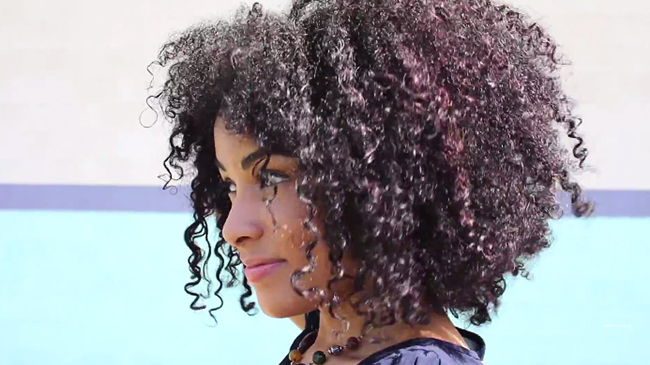
Whether you are interested in using henna for hair or skin, it is a powerful dye with conditioning properties. In addition to being used to dye hair, henna is used as a hair growth remedy. When henna is applied it puts a protective coating on the hair, and many women find that their strands feel thicker and stronger. In India, henna has long been used as a natural panacea for many haircare issues.

Make sure it's pure

In order to reap the benefits, make sure you are using pure henna. Many products that are labeled “henna hair color” are actually full of chemicals that can damage the hair. Stick with a trusted brand like Jamila or Reshma or buy it from a trusted natural herb supplier.

Henna's many uses

  1. DANDRUFF FIGHTER - It can help to reduce or eliminate dandruff 
  2. SCALP CLEANSER - It helps maintain the natural acid-alkaline balance on your scalp and cleanses it of dirt without altering the natural balance unlike chemical-based products. 
  3. SHINE BOOSTER - It smooths the hair cuticle, giving it a shiny, healthy appearance.
  4. SEALANT - It forms a coating on the cuticle which makes the hair appear thicker as well as shielding it from further damage. 
  5. NATURAL HAIR DYE - You can use henna as a healthy way to dye your hair a reddish tinge, as it does not contain damaging chemicals.
  6. HAIR GROWTH - Its antibacterial and antifungal properties nourish the scalp for optimal hair growth and less hair fall. 
  7. SKIN HEALER - If you have a burn injury, mix some henna powder with water and apply it on the affected areas for instant relief. It not only heals the wound, it also prevents infection and bacterial growth. It can help cure acne, boils and warts as well.
Some people report that henna loosens their curl pattern, I would not consider this a benefit but some people henna for this reason.

How to apply

If you're interested in trying henna for the first time, Reshma's henna has an easy 30-minute process that is not messy or difficult to apply. Watch how our editor Devri mixes and applies it to her hair.

Natural Hair: The Best Oils to Stimulate Hair Growth
It is common knowledge that healthy hair growth begins at the scalp. Over the last few decades, thousands of women have discovered the rejuvenating power that all natural essential oils can have on their scalps. The good news is, because of their recent rise in popularity, they are more readily available and don’t require an arm and a leg to purchase.
You can find the majority of these oils at your local health food stores. We also have our own recommendations below.
Coconut Oil
Coconut oil is the stuff of legends when it comes to healthy natural hair. It can be found at any grocery store and will run you about three dollars on the low end. You can even find odorless coconut oil which is what I prefer. A small bottle of coconut oil can last ages and promote a healthy shine and luster in your hair. Since I tend to use this “miracle” oil for everything from cooking to moisturizing my hair and body, “ages” is not in the cards for me!
Almond Oil
Almond oil is particularly beneficial when it comes to treating an unhealthy scalp. It is stated that this oil will change the health of your scalp drastically, and set up a nice foundation to a fast growing, strong head of hair.
Cedarwood Oil
Cedarwood oil is a new one for me and is supposed to be ideal for stimulating the scalp to promote overall hair growth. Because it is not recommended for nourishing the scalp or hair itself, it is advised not to use this oil as the first step in your hair growth regimen. Utilize products to create moisture first, then follow up with the products to stimulate hair growth.
Clary Sage Oil
Clary sage oil is another great oil to encourage hair growth. Though unlike cedarwood oil, this oil poses wonderful hair softening traits that are beneficial to creating a strong foundation for healthy hair. Try this oil for a one-step beauty regime.
While each of these oils is natural and ultimately good for your hair, they should be used with caution. Essential oils in particular, that have not been diluted, can be damaging to the scalp and hair, and create affects opposite to what you desire. Make sure to read labels and do some research before purchasing or putting anything on your body. It is also a smart practice to first test the oil on a small patch of your skin to be certain that you don’t have a negative reaction to it.

 Author: Pamela
 glam idol, Kara

If you are puzzled by the title of this article then you must have missed all the hoopla surrounding this quick means to gain around an inch of hair growth in a week. Who does not want to grow their hair faster? I know many women do and a quick Google search will tell you that this is nothing new. You can find thousands, possibly even millions of articles about hair growth and hair loss.
How does hair grow? 
Hair grows from the root at the bottom of the hair follicle and blood from the blood vessels in your scalp feed the root. This creates more cells and makes the hair grow. The hair is then pushed up through the skin as it grows through the sebaceous glands that add sebum to the hair to keep it soft, but too much can make the hair greasy. The hair dies by the time it protrudes from the skin so believe it or not hair is dead. Hair grows fast and the only part of the body that grows faster is bone marrow. On average, most people grow about a quarter to a half-inch a month or up to six inches a year. 

What is the Inversion Method? 
This is a new trend that claims to increase hair growth. The method is carried out over a period of seven days. You give yourself a scalp massage nightly with an oil and invert (tip upside down) yourself or just your head. Some choose to lean their head over the side of a bed, stand upside down, sit in a chair and lean over, or another variation of inversion for up to four minutes. Be careful as you can become dizzy, light-headed, or disoriented when trying this. This method claims to increase the blood flow to your scalp and stimulate the hair follicles, which will result in quicker growth, but does this work? 
The Science behind the inversion method 
This is what trichologist Dr. Kari Williams has to say about the inversion method: 

“Everyone is on the hunt for the newest ‘trick’ to grow hair, when the best ‘trick’ is found in the simplicity of maintaining a healthy lifestyle through regular exercise and a nutrient-rich diet. Healthy hair is a reflection of a healthy body. Increased blood circulation to the scalp can simply be achieved through scalp massages using deep rotary movements. These movements manipulate the tissues in the scalp, which stimulate blood flow, improve cellular functions and cellular regeneration. So you can stand on your head if you want to, but it's not necessary. You can simply massage your scalp and get the same benefits without the possible risks.” 

Verdict on the Inversion Method 
Scalp massages are great for increasing blood flow to the hair follicles, conditioning the scalp, strengthening the roots, and even reducing stress according to Pacific College of Oriental Medicine. Many do it nightly with great results so that alone is a winner in my book but coupling it with the inversion method has not been scientifically proven on humans for quicker hair growth. If you are physically fit, not pregnant, or do not have high blood pressure then you may want to give it a try, but as for me I will stick with the scalp massages. Here’s one of my favorites massage oil mixes. 

My Nightly Stress Reliever 

1 tbsp. of jojoba oil
Few drops of lavender oil
Extra-small ramekin 

Mix oils in extra-small ramekin before massaging throughout the scalp gently 
and in a circular motion. 


Have you tried the inversion method?

Many naturals report that their hair feels and even behaves differently when they live, move or vacation in an area with hard water. I now finally have scientific answers as to what could be happening!
1. The cuticle surface is the first point of call for both soft and hard water
Both soft and hard water contain metal salts including notably calcium and magnesium. Hair seems to have a preference for calcium ions and when hair is placed in hard water, calcium deposits at the cuticle edges and a little bit may travel inside the cuticle layers but not really into the cortex (BBA, pp 1-5, 2003).
water hardness
2. It may be more about pH than water hardness
Interestingly experiments have shown that for unbleached natural hair, there is little difference in the calcium deposits whether soft, hard or very hard water is used (J Cosmet Sci, pp 383-391, 2011). However, if the pH of the water is changed e.g comparing hard water at pH 7 to hard water at pH 8, then there is an increase in the deposition of calcium. Naturally hard water does tend to have a higher pH so it stands to reason that a potential fix for hard water may be adjusting its pH (e.g with lemon juice or apple cider vinegar).
3. Hard water makes natural hair a little more rigid
The effect of hard water does change if hair is chemically bleached or not. For unbleached natural hair, hard water use results in hair becoming a little more rigid compared to using soft water (technical terminology is an increase in Young’s Modulus). The implication for hair is that when it is wet with hard water, it is resistant to extension and will therefore require a little more stress (5% more) to break (Int J Cosmet Sci, pp 477-482, 2011). If your hair is straight to wavy, there are some advantages to this as you can use less force to comb your hair, however for curlier hair, this means a loss in flexibility and therefore you need to be careful when wet detangling.

4. Hard water can help your twist out last longer in humidity
Humidity can wreak havoc on some hair styles such as twist outs or curl/rod sets. A surprising advantage here for hard water is that the extra deposits of metal salts on the surface of hard water can actually give natural hair some humidity resistance allowing a set style to last just a little bit longer. This is thought to be possibly because calcium and magnesium may occupy spots on the hair where water vapour may want to bind and therefore slow down water uptake (Int J Cosmet Sci, pp 477-482, 2011). The increased resistance to humidity lasts about 2 hours showing that moisture uptake in humidity does happen, just slower.

Is hard water prominent in your area? How does it affect you?
Subscribe to RSS Feed Follow me on Twitter!